
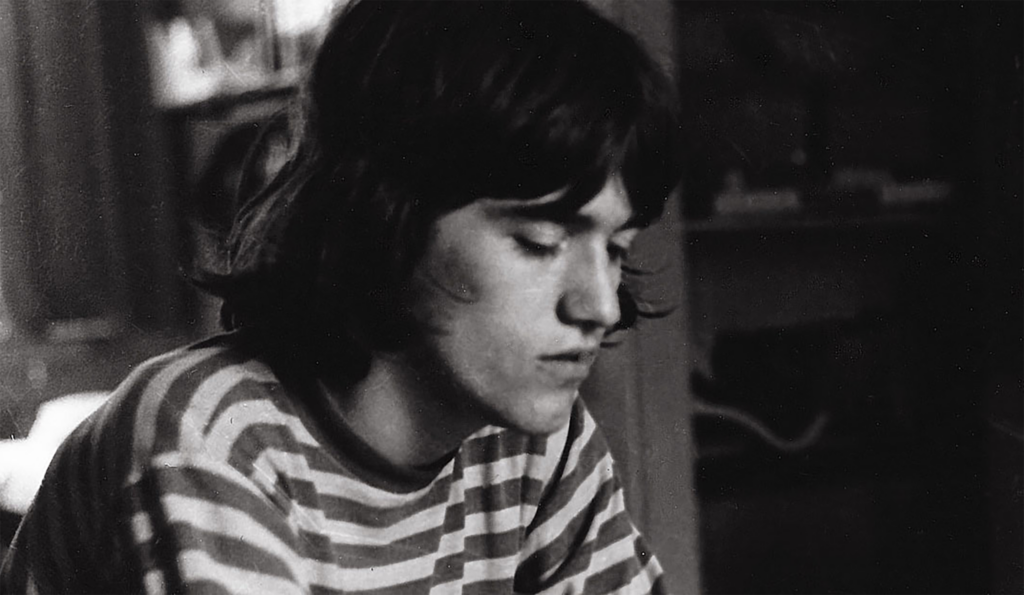
Bio on a forgotten disk |
This biography was retrieved from an old server and provides a fascinating glimpse into the life and work of photographer Hans van der Kamp. It highlights key moments from his career, his inspirations, and the profound influence his muse and other experiences had on his artistic journey. This text serves as a valuable piece of context, offering deeper insight into the motivations and themes that have shaped Van der Kamp’s body of work over more than four decades.
Hans van der Kamp (1955) discovered his muse in the early months of his short-lived time at art school, in the form of a transgender individual who lived as a Drag Queen. She was nicknamed Plumeau due to the many brightly colored boas she wore. The young Van der Kamp was especially fascinated by her sophisticated femininity, which stood out in the mid-1970s, a time when cisgender women often wore Indian sandals and dressed in India-inspired gowns or Afghan coats.
As a child, Van der Kamp had a recurring dream about his future. In it, he was married to a woman like Doris Day, who, like his mother, would always be at his side with soft drinks and tasty snacks. During his adolescence, in a time dominated by cigar-smoking feminist Dolle Mina activists, there was little room for such a fantasy, and Plumeau came much closer to his dream image than the girls he socialized with otherwise.
It was inevitable that Van der Kamp fell head over heels in love with Plumeau, a love that was not reciprocated at all, as his muse considered him a mere whippersnapper and preferred to address him by the nickname she had chosen for him: Pannelap. Their relationship did not go beyond that of photographer and model. The photographs of Plumeau are the oldest in this exhibition and are being included in a Dutch exhibition for the first time.
That Plumeau had a profound influence on his life is further evidenced by the fact that almost the entire first chapter of Nette Mensen in een Nieuwe Tijd, a novel Van der Kamp wrote and which was published in 1993 by L.J. Veen, is dedicated to a character clearly inspired by Plumeau.
In 1979, Van der Kamp gained some recognition with a solo exhibition of studio portraits of greasers at Galerie Cyclope in Brussels. At that exhibition, he encountered the photographer Paul Huf, whom he admired. Huf advised him to show the series to some popular magazines. The first editorial office to welcome him was that of Nieuwe Revu, where he worked on various series for years, always returning to his oldest theme of gender diversity.
This turned out to be for the best, as Van der Kamp was wholly unsuited to the tougher, more journalistic assignments that Nieuwe Revu initially required of him. During his first assignment—to photograph a squatters’ riot sparked by a visit from populist politician Janmaat to Amsterdam—he and a female news camerawoman were cornered by police wielding batons, just as a paint bomb exploded nearby. The camerawoman recovered within seconds, hurling curses at the police, but Van der Kamp collapsed to his knees and had to be carried by older, more benevolent colleagues to a nearby café, where a few shots of jenever revived him.
A sympathetic editor relieved him of further obligations in the realm of current affairs reporting, and Van der Kamp continued as the studio photographer we know today. He also continued to write about topics related to sexuality. Briefly, he served as editor-in-chief of the Dutch Playgirl, a magazine for women, and as a short story writer, won two consecutive awards from the student weekly Propria Cures, a feat unprecedented in its 102-year history.
In 1996, he became the first Dutch person to win the Website of the Year Award from Lotus Software, Sun Microsystems, and CM Corporate magazine for his online literary magazine De Opkamer, which was recently archived by the Royal Library. That same year, he was also nominated for the Young Network Warriors Prize by Delft University of Technology. However, when it was discovered too late that he was already forty years old, the nomination was withdrawn with apologies.
Nevertheless, photography and film have remained the guiding threads of his life. This exhibition, GENDER!, offers a selection of more than forty years of photography. Over the years, his work has been exhibited almost worldwide, with highlights in New York and Moscow. Exhibiting in Moscow, during the introduction of the law against “gay propaganda,” was no small feat. His portraits of transgender individuals, cross-dressers, and transsexuals were displayed in a museum on Novy Arbat, just a stone’s throw from the Kremlin. The works were repeatedly vandalized by conservative militia groups from outside Moscow, using clubs or acid, yet Van der Kamp remained a beloved photographer among more liberal Muscovites. This is evidenced by the fact that the exhibition, initially intended to last only three months, was maintained by the museum for almost five years.
